
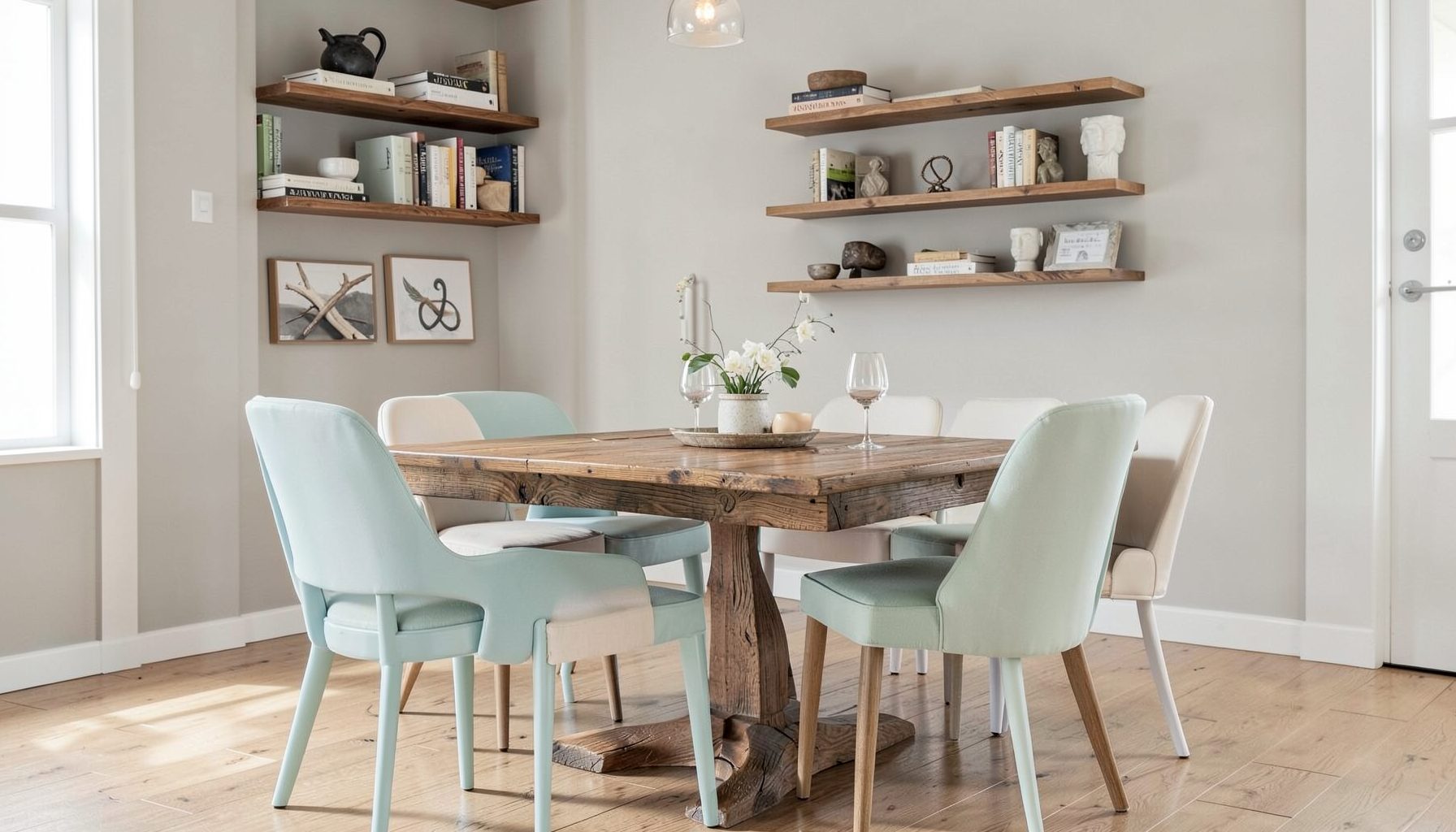
Interior Design
Full-service decorating that blends high and low, vintage finds with modern pieces for spaces that feel personal and collected.
Learn More
DIY Projects
Step-by-step tutorials for refinishing furniture, sewing pillows, styling bookshelves, and transforming rooms on a budget.
Learn More
E-Decorating
Personalized design guidance delivered online — perfect for clients anywhere in the world who want a professional eye.
Learn More
Portfolio
Browse completed room makeovers, before-and-after transformations, and styling projects from Bay Area homes.
Learn More
Blog
Interior design inspiration, fashion finds, entertaining ideas, and peeks into real home renovations and styling projects.
Learn More
Downloads
Free curated resources for home decorating and design — guides, checklists, and inspiration to help you get started.
Learn MoreMake a Dark Foyer Feel Brighter with a High-Gloss Ceiling
A dark foyer can make an entire home feel smaller before guests have even stepped beyond the entry. This is especially common in Australian houses and apartments, where the front door may open into a narrow hall, a tiled entrance, or a space shaded by an awning, verandah, neighbouring building, or mature street trees. The ceiling is often overlooked, yet it is one of the largest uninterrupted surfaces in the room.
A high-gloss ceiling can reflect daylight and lamplight back into the foyer, creating a subtle sense of height and movement. Used carefully, it can work with warm timber, vintage furniture, contemporary lighting, and practical entryway storage rather than making the space feel overly polished. The key is to prepare the surface properly, choose the right sheen, and balance reflection with softer finishes at eye level.
Start by understanding the darkness
Before choosing paint, identify where the lack of light comes from. A foyer facing south in Melbourne may receive very little direct sun, while an entry in a Sydney terrace can be shaded by a neighbouring wall. In Brisbane or the Gold Coast, a deep roof overhang can protect the front door from heavy rain and intense sun while also blocking useful daylight. A dark floor, heavy wall colour, or solid internal door can deepen the effect.
Notice how the space changes throughout the day. A foyer that feels gloomy at breakfast may look quite different in the afternoon. Switch off artificial lights and observe the available light from sidelights, glazed doors, borrowed light from adjoining rooms, and nearby windows. This will help determine whether a reflective ceiling can solve the problem on its own or whether the entry also needs brighter bulbs, a glass panel, or a lighter wall treatment.
The ceiling finish should support the architecture rather than disguise it. In a period cottage, federation house, or Victorian terrace, a reflective ceiling can highlight cornices and ceiling roses. In a modern apartment, it can give a low ceiling a clean, luminous plane. If the ceiling is uneven, cracked, or heavily textured, glossy paint may emphasise every irregularity, so surface repair should come first.
Choose the right level of sheen
True high-gloss paint produces the strongest reflection, but it is also the least forgiving finish. Satin or semi-gloss can provide much of the same brightening effect while disguising minor imperfections. For many foyers, a ceiling-specific product in a durable low-sheen or mid-sheen finish offers a more relaxed result than a mirror-like surface.
The best choice depends on the ceiling’s condition and the mood of the home. A crisp white gloss ceiling can feel architectural and fresh, while a warm ivory or very pale stone shade will reflect light without creating a stark contrast with cream walls. In a home filled with aged brass, oak, rattan, or antique furnishings, a soft warm white often feels more integrated than a blue-based brilliant white.
Sample the paint on a board and hold it vertically in the foyer at different times of day. Gloss changes dramatically as light moves across it. Compare the sample with the front door, skirting boards, flooring, and nearby wall colours. Paint manufacturers such as Dulux, Taubmans, and Haymes offer a wide range of whites, but the name of a colour is less useful than the way it responds to the actual light in the space.
Prepare the ceiling for reflection
Cleaning and preparation are essential because a shiny surface reveals grease, dust, roller marks, and patching. Entry ceilings can collect fine dust from open doors, ceiling fans, and busy households, even when they appear clean. Wash the surface with a suitable sugar-soap solution, allow it to dry fully, and remove flaking or powdery paint before filling cracks and dents.
If the ceiling has been painted many times, a stain-blocking or adhesion primer may be needed. Water marks around a bathroom-adjacent entry, smoke residue, and old yellowing can otherwise show through the new finish. Sand repairs smooth, then remove every trace of sanding dust. A high-gloss topcoat will reflect the repaired area if the transition is not feathered carefully.
Australian homes built before 1970 may contain lead-based paint, particularly under layers of newer paint. Avoid dry sanding or disturbing old coatings until the surface has been assessed, and follow state or territory guidance for safe removal. In older homes, asbestos can also occur in unexpected building materials, although it is not generally a ceiling-paint issue; any renovation involving suspect material should be handled by a licensed professional.
Build brightness from the ceiling down
A reflective ceiling works best as part of a layered lighting plan. A pendant near the entry can cast light upwards as well as downwards, while a wall sconce or picture light can wash the ceiling with a soft glow. If the foyer has a central light fitting, choose a design with a translucent shade or open lower structure rather than an opaque bowl that traps illumination.
Use warm-white LED lamps around 2700K to 3000K for a welcoming residential atmosphere. Very cool lamps can make white gloss appear harsh and can exaggerate the clinical quality of a small entry. Check the fitting’s compatibility with dimmers, especially in older Australian homes where the existing switch or transformer may need attention. Electrical work should be carried out by a licensed electrician in accordance with Australian requirements.
A mirror positioned opposite or beside the door can extend the effect, but it should reflect something attractive rather than a pile of shoes or a blank wall. A narrow console with a reflective stone, ceramic, or glass surface can continue the play of light at a lower level. Keep the arrangement edited: a few collected objects will look intentional, while too many small accessories can make a dark foyer feel visually busy.
Keep the walls and floor supportive
A bright ceiling does not require an all-white foyer. Mid-tone walls can create a richer contrast and make the ceiling appear higher, particularly when the skirting and architraves are painted in a related shade. Colours with a little warmth tend to be forgiving under Australian daylight, which can be sharp and changeable depending on the season and aspect.
If the walls are deep green, charcoal, navy, or terracotta, use the ceiling as a quiet counterpoint. A pale ceiling will reflect the surrounding colour, so test it against the existing paint rather than assuming it will read as pure white. The reflected colour can be beautiful, giving the ceiling a gentle glow that connects it to the room.
Flooring matters just as much. Dark timber, slate, patterned tiles, and black-and-white checkerboard floors can all work in an entry, but they absorb or interrupt light at the lowest point of the space. A runner in a faded pattern or a pale natural fibre can soften the floor without making the foyer impractical. In Australian households where shoes are often removed at the door, select a washable, hard-wearing runner and leave enough clearance for the door swing.
Use the finish with personality
A glossy ceiling does not have to look formal. In a collected interior, it can provide a polished backdrop for a battered timber bench, a vintage umbrella stand, or a contemporary artwork. The contrast between reflective paint and tactile materials creates depth. Pairing the ceiling with linen, cane, wool, aged metal, or handmade ceramics prevents the entry from feeling like a showroom.
Colour drenching is another option. Painting the ceiling, walls, and trim in related tones can make a small foyer feel enveloping, while the gloss ceiling adds a lighter plane above. This approach is particularly effective in a narrow hall where strong contrasts can make the space appear chopped into sections. A dark olive or smoky blue wall with a lighter glossy ceiling can feel atmospheric rather than gloomy.
For an apartment or strata property, check whether painting the inside of the entry door, altering light fittings, or making changes visible from a shared corridor requires approval. Internal cosmetic work is often straightforward, but strata by-laws differ between buildings and states. Protect shared carpet, lift surfaces, and corridors during the project, and schedule delivery or trades around building access rules.
Avoid common painting mistakes
Applying high-gloss paint over an unprepared ceiling is the fastest way to make a foyer look worse. Roller texture, lap marks, repaired nail holes, and uneven edges become prominent when light bounces across the surface. Use a quality roller suited to the product, maintain a wet edge, and work in manageable sections. A second coat is usually preferable to applying one heavy coat that sags or dries unevenly.
Do not assume that one product works equally well on plasterboard, timber, pressed metal, and previously painted masonry. Read the technical data sheet and confirm whether the product is suitable for ceilings and compatible with the existing coating. In a humid Queensland climate, allow extra drying time and provide ventilation without creating a stream of dust across the wet surface. In colder parts of Victoria or Tasmania, temperature can also affect curing.
Gloss amplifies visual clutter, so finish the room before judging the result. Hide exposed cords, edit the console styling, and address harsh shadows at the door. If the foyer still feels dim, the answer may be a brighter globe, a better-positioned fitting, or a lighter obstruction outside the entry rather than another layer of paint.
A reflective ceiling is most successful when it feels like a considered part of the home’s character. It can bounce light into a narrow hall, emphasise architectural details, and give an ordinary entry a quietly memorable quality. The finish becomes especially effective when balanced with warm lighting, useful storage, tactile flooring, and objects that reveal the people who live there.
For a small Australian foyer, begin with a daylight observation, a painted sample board, and a surface check. Then choose a ceiling sheen that suits the condition of the plaster, confirm any strata or safety requirements, and book a licensed electrician if the lighting needs upgrading.

Recent Projects