Interior Design
Full-service decorating that blends high and low, vintage finds with modern pieces for spaces that feel personal and collected.
Learn More
DIY Projects
Step-by-step tutorials for refinishing furniture, sewing pillows, styling bookshelves, and transforming rooms on a budget.
Learn More
E-Decorating
Personalized design guidance delivered online — perfect for clients anywhere in the world who want a professional eye.
Learn More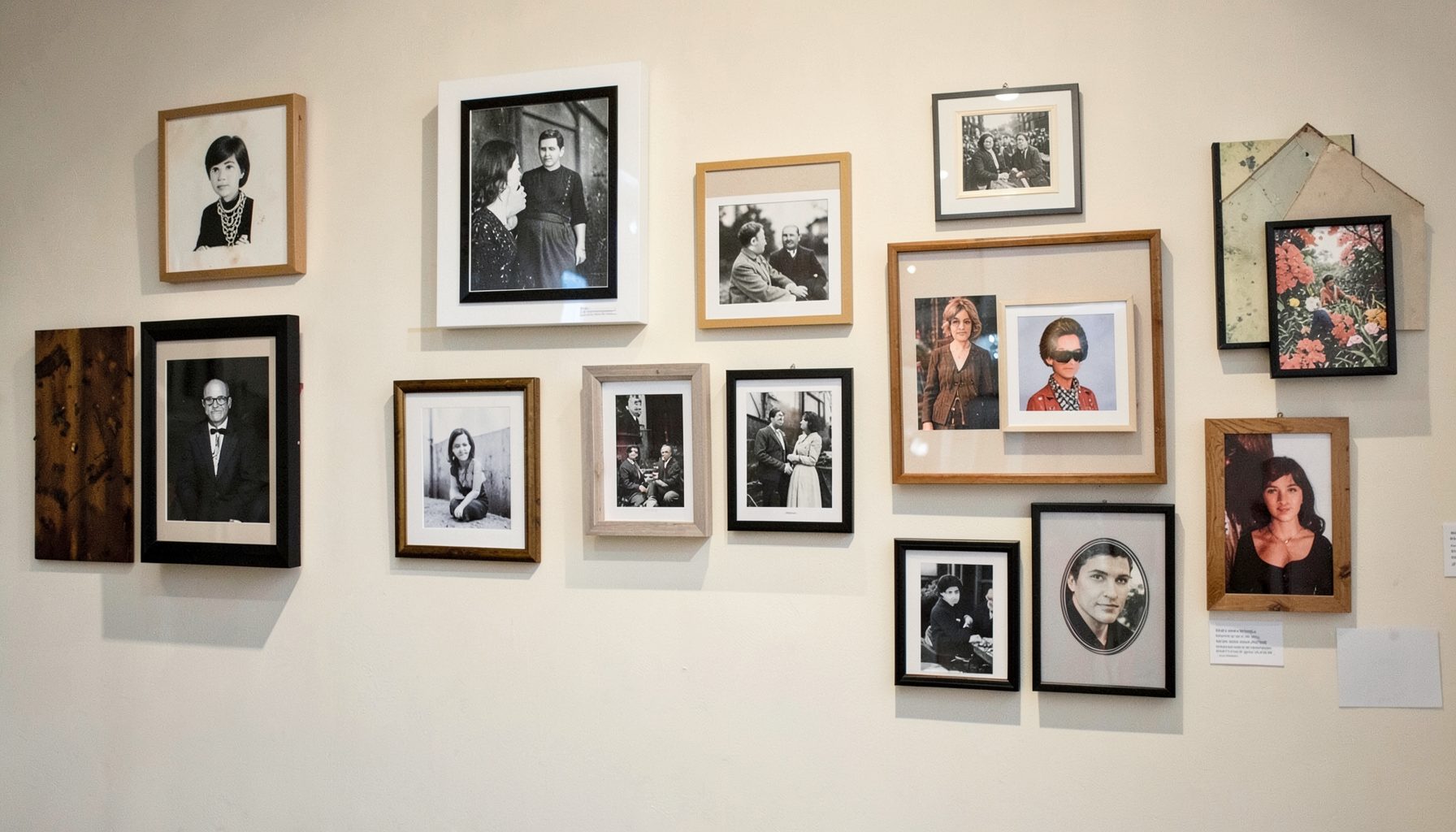
Portfolio
Browse completed room makeovers, before-and-after transformations, and styling projects from Bay Area homes.
Learn More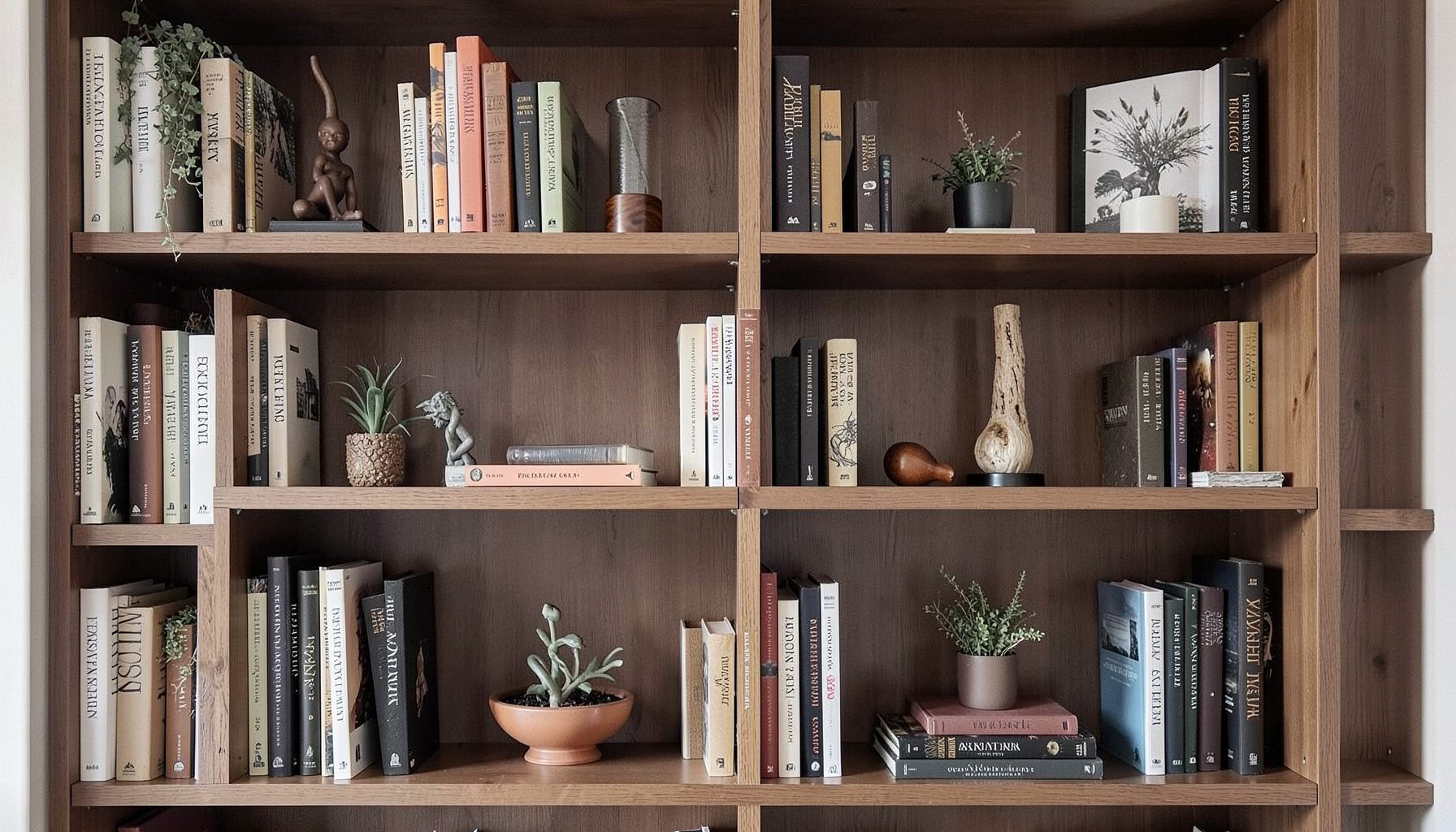
Blog
Interior design inspiration, fashion finds, entertaining ideas, and peeks into real home renovations and styling projects.
Learn More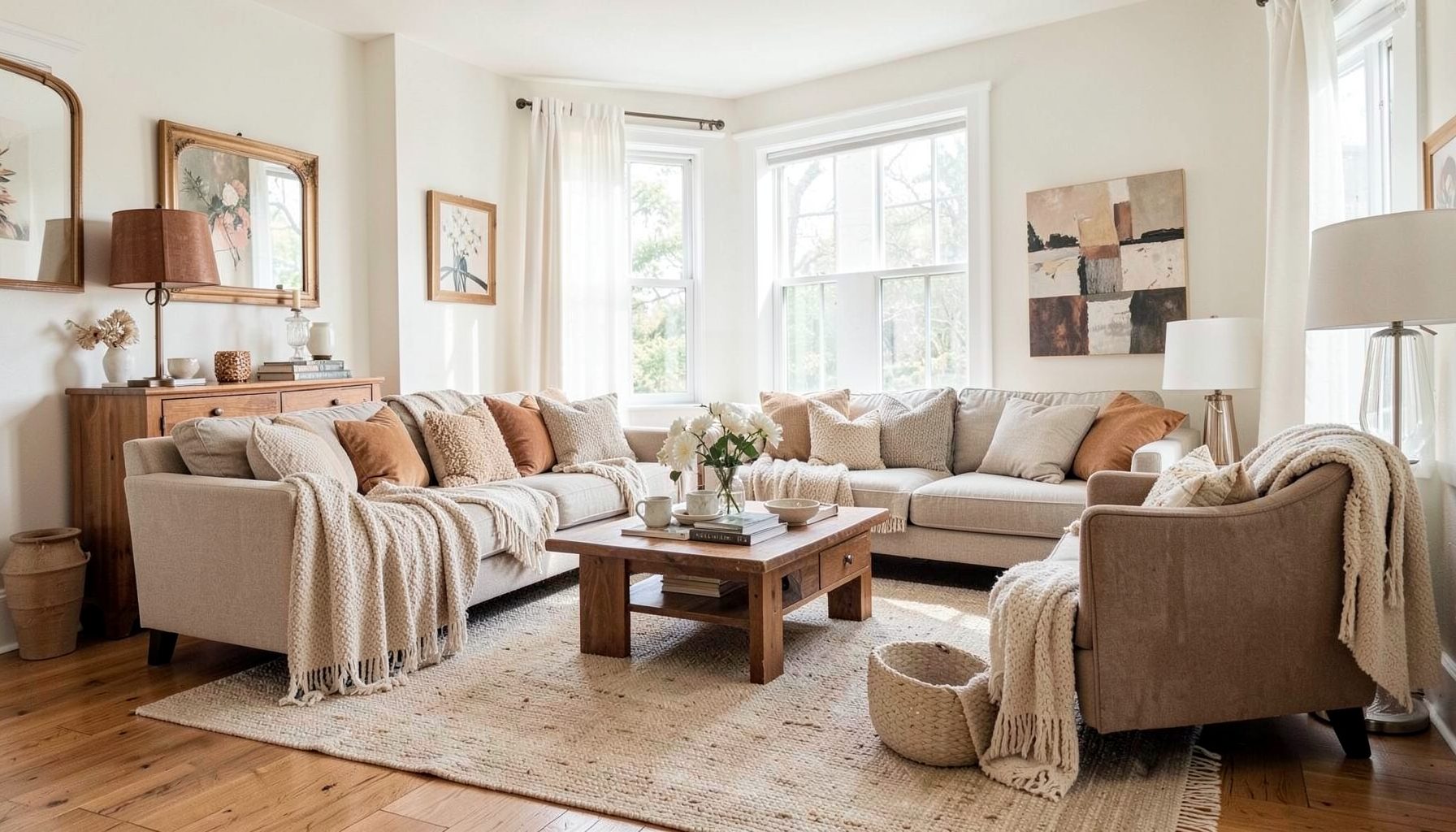
Downloads
Free curated resources for home decorating and design — guides, checklists, and inspiration to help you get started.
Learn MoreChoosing Art Above a Sofa in a High-Ceilinged Room
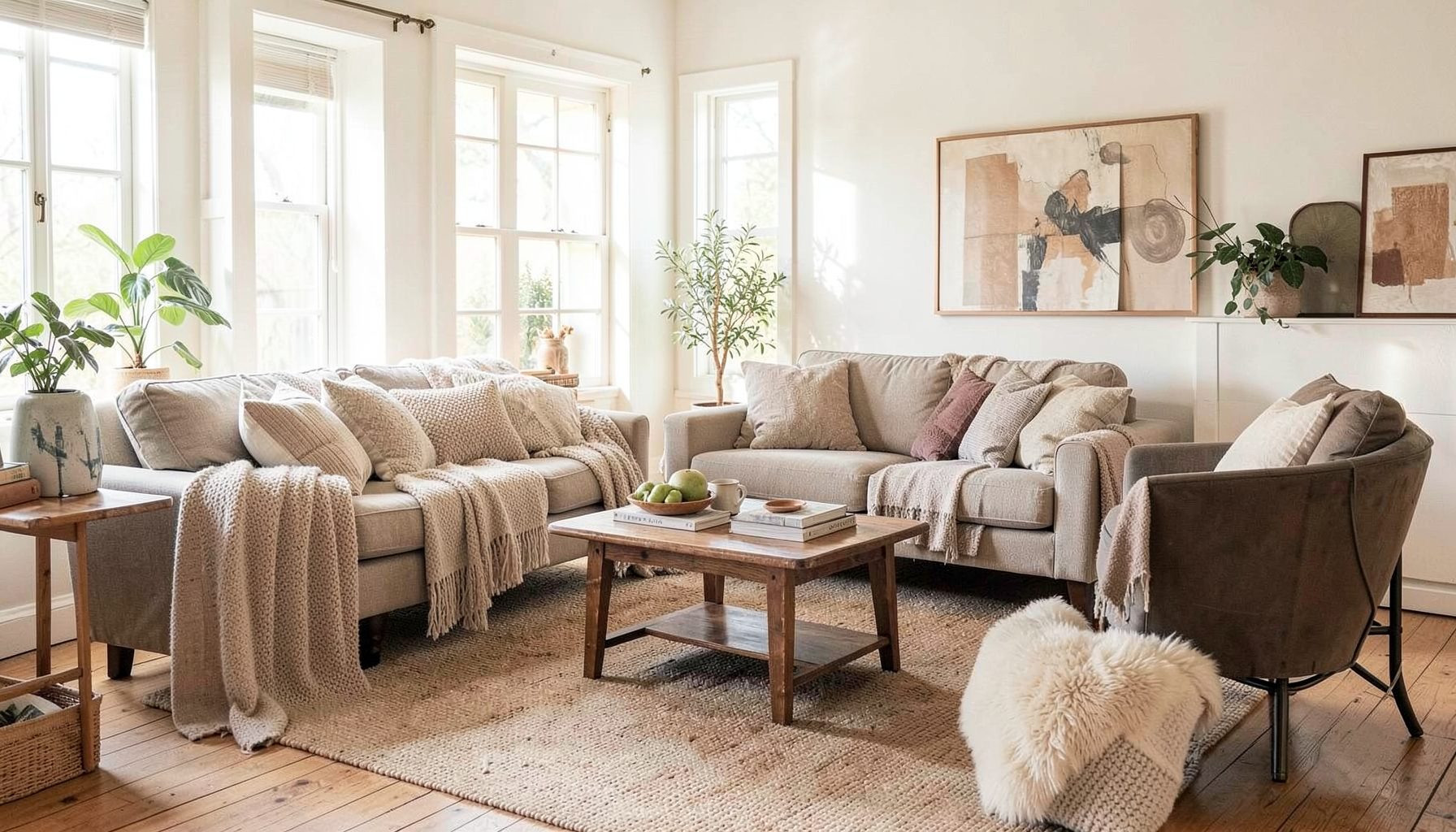
A sofa often becomes the visual anchor of a living room, so the wall above it needs more than a small picture placed at eye level. In a room with generous ceiling height, the artwork must relate to the sofa below while also acknowledging the volume above. The right piece can make a tall room feel elegant and grounded rather than sparse or echoing.
Choosing art for above a sofa when you have high ceilings is largely an exercise in proportion. Scale, orientation, colour, framing and hanging height all influence whether the arrangement feels intentional. A large painting may create a confident focal point, while a group of smaller works can bring a collected, personal quality to the room.
Australian homes offer plenty of different settings for this decision. A Melbourne terrace may have high ornamental ceilings and narrow walls, a Sydney apartment may need to balance soaring proportions with compact furniture, and a Brisbane living room may receive strong, warm daylight for much of the day. The best artwork responds to the architecture, furnishings and quality of light rather than following a fixed formula.
Start With the Sofa and Wall Proportions
Begin by measuring the sofa, the available wall width and the distance from the top of the sofa to the ceiling. Artwork usually looks most settled when its overall width is around two-thirds to three-quarters of the sofa’s width. This proportion gives the arrangement enough presence without making the sofa seem visually trapped beneath it. For a two-metre sofa, a single work or arrangement measuring roughly 130 to 150 centimetres wide may be a useful starting point.
High ceilings can tempt you to choose the biggest artwork available, but width often matters more than height. A tall, narrow canvas may emphasise the verticality of the room while leaving too much empty wall on either side. If the sofa is broad and low, a horizontal artwork, diptych or wide salon-style arrangement will usually create a more balanced relationship.
Look at the complete composition rather than judging the artwork in isolation. A low modular sofa, a substantial coffee table and a large rug can support a bolder piece. A delicate timber sofa or compact apartment lounge may need a quieter arrangement with more breathing room. In a high-ceilinged room, the art should visually connect the lower furniture group to the upper architecture.
Decide Between One Statement Piece and a Collection
A single oversized painting is effective when the room benefits from clarity. It can give a tall wall a calm centre and allow the texture, brushwork or subject matter to carry the design. Abstract art is particularly useful because it can introduce movement and colour without competing with a view, fireplace or architectural detail. When combining a contemporary work with a traditional sofa, consider these ideas for pairing abstract art so the contrast feels deliberate rather than accidental.
A collection of works creates a different mood: layered, collected and more personal. Two or three related canvases can fill a wide wall while retaining a sense of lightness. A salon arrangement can also suit a home filled with books, ceramics, vintage furniture and travel finds. In a Federation or Victorian-style Australian home, a considered gallery wall may echo the building’s history without turning the room into a period display.
The pieces do not have to match exactly. They might share a palette, subject, frame finish or visual weight. For example, black-and-white photography can sit beside a small oil painting if both have similar margins and tonal depth. Keep the arrangement connected by laying the works on the floor first, then adjust the spacing until the group reads as one shape.
Use Vertical Space Without Hanging Art Too High
A high ceiling does not mean artwork should be hung close to the ceiling. The most common mistake is positioning a picture according to the height of the room rather than the furniture beneath it. The centre of the composition should relate to seated and standing sightlines, while the lower edge generally sits about 15 to 25 centimetres above the sofa back. This gap may need to increase slightly if the sofa has unusually high cushions or a deep back.
For a single large painting, the centre can sit around 145 to 155 centimetres from the floor, then be adjusted according to the room and the furniture. The important point is that the artwork should feel attached to the sofa zone, not floating halfway up the wall. In a room with a three-metre ceiling, leaving a generous area above the artwork is perfectly acceptable. That negative space gives the piece room to breathe.
If the wall still feels bare above a medium-sized painting, add height through a stacked arrangement rather than raising the entire display. Two vertically oriented works, a tall textile or a narrow pair of paintings can extend the composition gracefully. Picture lights, wall panelling or a slim console beneath the sofa wall can also help create a visual bridge, provided they do not make the area feel crowded.
Build a Palette That Works With Australian Light
Art should relate to the room’s existing colours, but it does not need to repeat every shade. Identify two or three tones from the sofa, rug, curtains or timber and look for artwork that includes variations of them. A neutral living room may benefit from ochre, rust, eucalyptus green or deep blue, while a colourful room might be better served by a quieter work with earthy or chalky tones.
Natural light changes significantly across Australian locations and seasons. Strong northern light in Melbourne or Sydney can make pale works appear washed out during the day, while a shaded Brisbane room may support more saturated colour. Glass can introduce glare, especially on walls opposite large windows, so a painting with a matte surface or museum-grade non-reflective glazing may be a practical choice.
Think about how the artwork looks at different times. View it in morning light, afternoon sun and evening lamplight before committing to a large purchase. Samples, printed colour studies and temporary digital mock-ups can help, although they cannot fully reproduce texture. A piece that looks subtle online may have a powerful presence in person, while a highly polished image may feel flat when seen at home.
The local art market offers plenty of ways to find work at different price points. Look at Australian artists through independent galleries, studio sales, design markets and curated online platforms. Original works from emerging artists can bring individuality without the cost of an established name, while limited-edition prints offer a more accessible way to achieve scale. Allow for Australian framing costs, delivery and, where relevant, custom glazing when setting a budget.
Choose Frames, Materials and Installation Carefully
The frame should support the artwork and the room’s architecture. A simple oak frame can warm a contemporary space filled with linen and timber, while a dark stained frame can give a pale painting greater definition. Thin black frames suit graphic works and photography, but repeated black accents elsewhere in the room will help them feel integrated. Ornate frames can be beautiful above a traditional sofa, especially when their finish is echoed in a mirror, lamp or antique side table.
Canvas, paper, textile and mixed-media works each affect the visual weight of the arrangement. A large unframed canvas can feel relaxed and modern, whereas a work on paper usually benefits from a mount and frame that create breathing space around the image. In a tall room with polished floors and hard surfaces, tactile materials such as woven art, linen or heavily textured paint can soften the acoustics as well as the appearance.
Installation deserves as much attention as selection. Use appropriate wall anchors for the weight of the work and the construction of the wall, particularly in older Australian houses where plaster, brick and timber may require different hardware. A professional installer is worthwhile for a large or valuable piece. For renters, a carefully planned grouping of lighter works may be easier to secure and reposition than one very heavy statement canvas.
Before drilling, mark the proposed dimensions with painter’s tape or cut paper templates. Stand back from several points in the room, including the sofa, entry and adjacent dining area. Check that the arrangement aligns with architectural features such as a fireplace, doorway or window. This small planning stage prevents the artwork from appearing too high, too narrow or awkwardly offset once it is on the wall.
A successful arrangement should feel connected to the room rather than placed there as an afterthought. In a tall living space, the artwork can provide intimacy beneath the lofty architecture, introduce colour beside a neutral sofa and reveal something about the people who live there. It may be a quiet landscape, a bold abstract, a family photograph or a group of modest works collected over time.
Resist choosing a piece solely because it fills the wall. Live with samples, measure the furniture and pay attention to how the work changes in natural and artificial light. The most convincing result usually comes from balancing scale with restraint: enough art to hold the room, enough empty space to preserve its sense of height.
Tape the proposed artwork dimensions above the sofa this weekend, leave them in place for 24 hours, and measure the final frame size before ordering or commissioning the piece.

Recent Projects